| Plastics News |  |
 |
Wacker showcased self-adhesive silicone rubber for medtech applications and silicone gels for transdermal patches at Compamed
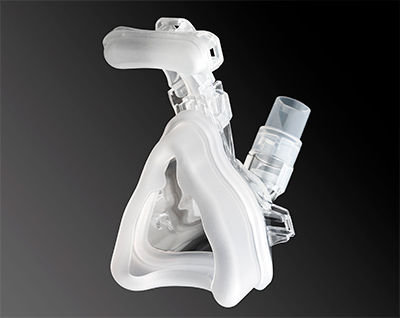
November, 26, 2026 - From November 16 to 19, Wacker showcased the first non-postcure silicone rubber with self-adhesive properties at this year’s Compamed medical technology trade fair. Known as Elastosil LR 5471, this silicone rubber cures to form a silicone elastomer with an extremely low volatile content, Wacker claims. This makes it possible for hard/soft combinations made of Elastosil LR 5471 to be used in the food, medical and baby-care sectors without postcuring. During the exhibition, Wacker also presented silicone adhesives for transdermal patches and silicones for pharmaceutical and medical applications. Self-adhesive liquid silicone rubber grades can be used to produce a broad range of hard/soft combinations very efficiently. Internal adhesion promoters added to the silicone polymer ensure reliable adhesion. Ideally, the liquid silicone rubber can be molded onto the hard component in the injection-molding machine without surface pretreatment, enabling cost-effective production of thermoplastic/silicone elastomer and metal/silicone elastomer combinations. This also applies to Elastosil LR 5471, a self-adhesive liquid silicone rubber that, according to Wacker, achieves excellent adhesion values on metals and thermoplastics. During in-house testing, an adhesion of 28 N/mm (as per ISO 813) was measured on polybutylene terephthalate (PBT). Equally good results were achieved on polyethylene terephthalate (PET). Standard liquid silicone rubber involving food contact or intended for medical applications usually has to be treated for several hours in a postcure oven. This is not required for Elastosil LR 5471, Wacker claims. Measurements on test plates 2 mm thick show that the cured silicone exhibits a volatile content of less than 0.4 percent, the company says. Molded articles made of Elastosil LR 5471 therefore comply with recommendations issued by the German Federal Institute for Risk Assessment BfR even without postcuring (Recommendation XV. Silicones). What is more, according to Wacker, the mechanical properties of the silicone were also optimized. Non-postcured parts achieve an elongation at break of 570 percent and a tear strength of 38 N/mm (as per ASTM D 624 B). Elastosil LR 5471 therefore provides sufficiently high elasticity and mechanical strength for demanding applications in sensitive areas. Possible fields include seals and flexible scrapers for cookware, baking and kitchen utensils, patches for surgical masks and therapeutic devices as well as soft components for pacifiers and baby bottle teats. Elastosil LR 5471 is an addition-curing material consisting of two components that are compounded before processing. It is available in 40 and 50 Shore A hardnesses and is ideal for the large-scale production of overmolded parts (thermoplastic/elastomer). Silicones for transdermal patches Silicone gels have been used as atraumatic fixing aids for several years. They are highly skin-compatible and can be removed gently, despite adhering readily to the skin. Silpuran silicone adhesives are suitable for fixing sensors, dosing devices, ostomy bags, and other medical technology components. Compamed gave Wacker an opportunity to present a further area of application for such products: transdermal patches. As a stable, biocompatible and breathable matrix, silicone gels can store medical or cosmetic active ingredients and release them on the skin at a controlled rate over time, Wacker claims. In a recently conducted study, Wacker examined 20 active ingredients that are suitable for such applications. The ingredients include over-the-counter therapeutics, such as ibuprofen, anti-inflammatory drugs, herbal remedies, vitamins and dietary supplements, the company says. An additional benefit of these silicone adhesives is that they offer customizable release profiles which control the amount, the rate and the duration of the release. According to Wacker, active ingredients can therefore be delivered at a constant and steady rate, via an initial burst or after a prolonged delay. Thus, silicone gels are more than just carrier materials. They form the basis for the next generation of transdermal systems that are gentle on the skin, can be dosed with precision and are highly versatile in use. Expert and research team lead Ufuk Karabiyik present further results of the study in a presentation during the show (Presentation title: “Transdermal active delivery study results: superior release of active ingredients from silicone gel adhesives.”) Silicones for the pharma industry At Compamed, Wacker showcased silicone-based solutions for pharmaceutical and medical uses. This time, specialty silicones from Wacker’s Silpuran and Elastosil product lines are in the limelight. According to Wacker, these silicones are pure, sterilizable and chemically as well as physically resistant, being ideally suited for medical applications. Wacker’s extrudable solid silicones enable the efficient production of high-quality pharmaceutical and medical tubing, the company claims. For injection or compression molded components, special liquid and high consistency silicone rubber grades are the material of choice. The range of applications spans many fields, including ventilator masks and instrument handles as well as sterilization mats, seals, membranes, and medical cables. Photo: Wacker Respiratory Mask (Source: Wacker)
|