| Plastics News |  |
 |
Shibaura Machine LWB will Launch Vertical Injection Molding Machines during exhibition in Japan
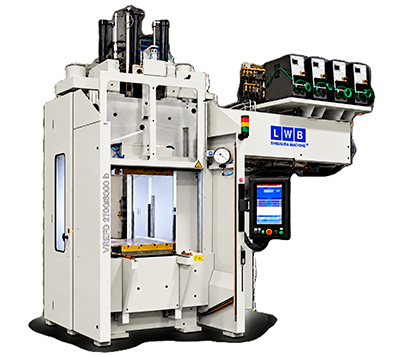
November, 26, 2026 - At IPF 2026, which will take place in Tokyo from December 1 to 5, 2026, Japanese manufacturer Shibaura Machine will highlight how intelligent technologies, advanced molding and extrusion solutions, automation and thermal management can work together to optimize production across the entire factory. The company will also introduce LWB vertical injection molding machines to the Japanese market for the first time. The highlight is the new VR270t (photo), combining high clamping force, a compact footprint and flexible automation options for demanding elastomer and thermoplastic applications. Japan Premiere: Launch of LWB Vertical Injection Molding Machines “Expanding our comprehensive product portfolio into new markets and strengthening our global market position are key drivers of our strategy. By combining Shibaura Machine’s strong local presence and recognized brand awareness in Japan with our expertise and know-how in vertical injection molding machines, we will be able to offer customers in Japan a significantly broader range of modern injection molding solutions for their production needs in the future,” says Dr. Georg Holzinger, Managing Executive Officer of Shibaura Machine and Chairman of the Management Board of Shibaura Machine LWB GmbH. The VR270t vertical injection molding machine will take center stage at booth 72708 in hall 7/8 at IPF 2026. Its vertical O-frame design delivers 2,700 kN of clamping force while keeping the footprint compact. Shibaura says that the vertical setup ensures precise insert positioning by gravity, and the accessible mold area allows both manual loading and automated handling. Fully hydraulic cylinders distribute force evenly across the mold. A robust, maintenance-free frame ensures long-term reliability and reduces maintenance, the manufacturer says. Adaptable platens, flexible frame geometry, and a choice of injection systems let users configure the machine for specific applications and integrate it into custom production cells. "Vertical injection molding offers significant advantages, particularly for insert molding and applications requiring precise component positioning. With the VR270t, we combine high clamping force and a space-efficient design with excellent accessibility and flexible configuration options. This makes the machine an attractive solution for manufacturers looking to improve process reliability, productivity, and automation," says Clemens Behmenburg, Executive Vice President System & Solutions at Shibaura Machine LWB. Production Solutions Across the Value Chain At IPF 2026, Shibaura Machine will also demonstrate its expertise in intelligent manufacturing under the theme "S-Concept × Intelligent Systems × Thermal Management." The exhibition will feature live demonstrations of the EC350SXIII all-electric injection molding machine, intelligent process monitoring, automated production switching with the EC100SXIII, and technologies for processing recycled materials. Further highlights include twin-screw compounding with the TEM Series, automated sheet production with the SPU-326W, digital production management with iPAQET 4.0, and solutions for cooling-water and thermal management. With its expanded portfolio and combined engineering capabilities, Shibaura Machine aims to support customers worldwide with integrated solutions spanning injection molding, automation, digitalization, and sustainable production. Advancing Smart Manufacturing with machiNetCloud and LEO Industrial AI At IPF, Shibaura Machine will also showcase its industry-leading Industrial Internet of Things (IIoT) platform, machiNetCloud, alongside LEO, its latest AI-powered operator assistant. Shibaura Machina says tha, together, these innovative solutions demonstrate its commitment to accelerating digital transformation, improving manufacturing productivity, and making industrial intelligence more accessible to manufacturers. According to the manufacturer, machiNetCloud is an advanced IIoT platform designed to maximize operational efficiency, improve equipment uptime, and deliver measurable returns on investment across manufacturing operations. Going beyond Shibaura Machine's vertical injection molding machines, the platform supports both all-electric and hydraulic injection molding machines, as well as auxiliary equipment, providing seamless connectivity and centralized visibility across the production floor. With capabilities including real-time machine monitoring, remote access, predictive maintenance, recipe management, energy consumption tracking, and performance analytics, machiNetCloud enables manufacturers to make data-driven decisions, proactively address potential issues, minimize unplanned downtime, optimize production cycles, and reduce total cost of ownership, Shibaura Machine claims. LEO, Shibaura Machine's AI-powered operator assistant, represents an evolution in intelligent manufacturing support, the company says. Leveraging conversational artificial intelligence (AI), LEO provides operators with intuitive access to machine-specific information, real-time operational insights, and step-by-step guidance for machine operation, troubleshooting, and setup. In today's manufacturing environment, critical equipment knowledge often resides with a handful of experienced operators who understand machine behavior, alarm codes, troubleshooting procedures, and the intricacies of technical manuals. As these experienced professionals retire and a new generation enters the workforce, preserving and transferring this knowledge becomes increasingly important. LEO helps bridge this knowledge gap by transforming complex technical documentation into accessible, conversational guidance, empowering operators of all experience levels to find answers quickly, resolve issues more efficiently, and maintain consistent production performance across shifts. Together, machiNetCloud and LEO highlight Shibaura Machine's vision for the future of manufacturing, where connected equipment, actionable data, and artificial intelligence work together to create smarter, more efficient, and more resilient production environments. With its expanded portfolio and combined engineering capabilities, Shibaura Machine aims to support customers worldwide with integrated solutions spanning injection molding, automation, digitalization, and sustainable production. Shibaura Machine LWB, the German subsidiary of Japan's Shibaura Machine, was founded in 2025 after acquiring an 80% stake in LWB Steinl GmbH. By merging expertise in horizontal and vertical injection molding machines with automation, the company develops fully automated production cells. It provides plastics processors and injection molders with solutions for working with thermoplastics, rubber, silicone, and elastomers. Shibaura Machine ranks among the leading manufacturers of precision injection molding machines, machine tools, die-casting machines, industrial robots, and extruders. Its technical roots trace back to 1875. From 1961 to 2020, it operated under the Toshiba Machine name. The company claims it pioneered mechatronics-based production systems and set a benchmark in 1998 with its all-electric injection molding machines. With 70 locations and six advanced production facilities, it maintains a strong presence across Asia, the Americas, and Europe. Photo: Shibaura Machine LWB
|