| Plastics News |  |
 |
Stadler expands into Japan with new office to address the country’s evolving recycling market
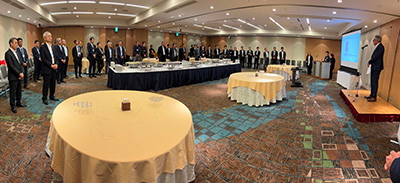
May 28, 2026 - Stadler Anlagenbau GmbH, the globally active German company specialising in the planning, production and assembly of turnkey sorting plants, has opened a new office in Japan, marking another step in its international growth strategy and reinforcing its long-term commitment to the Asian market. The launch was marked by a dedicated event (photo above) bringing together industry players, partners, relevant associations and media representatives, offering an opportunity to showcase Stadler’s activities in Japan and engage with key stakeholders in the country. Alongside Willi Stadler, the event was also attended by Jürgen Berger, Head of International Sales at Stadler Anlagenbau GmbH, and Ursina Mutzner, Sales Manager responsible for the Japan market, underlining the company’s commitment to Japan and its long-term growth strategy in the region. “This opening is an important milestone. We believe that with our technology, we can make a significant contribution to improving the sorting of valuable materials in Japan and return them to the recycling loop for a cleaner and more sustainable world,” said Willi Stadler, Co-CEO of Stadler Group. Japan’s transition towards circularity and new opportunities for material recovery Japan is a strategically important market for Stadler, characterised by a strong focus on quality and a highly developed waste management infrastructure. The country, which has historically accounted for around 70% of the world’s incineration facilities, has built a waste management model strongly centred on Waste-to-Energy (WtE), supported by limited landfill availability and high urban density. At the same time, Japan is advancing its transition towards a more circular economy, driven by an increasingly stringent regulatory framework and a growing emphasis on material quality and resource efficiency. Initiatives such as the Plastic Resource Circulation Act, promoted by the Japanese Ministry of the Environment, are reinforcing the need to improve plastic recycling rates and strengthen upstream sorting processes. In this context, there is growing interest in pre-incineration sorting solutions that enable the recovery of valuable recyclable materials, particularly plastics and municipal waste streams. This includes the development of dry sorting technologies as an alternative to conventional wet processes. Another key aspect is the integration of sorting facilities alongside existing Waste-to-Energy plants to maximise material recovery before energy generation. Stadler says the company is well positioned to support this transition by leveraging its European expertise . Shifting waste management dynamics in Japan: the growing role of sorting solutions Stadler’s decision to establish a direct presence in Japan builds on more than a decade of activity in the market. The company’s first project in Japan dates back to 2010, with a presorting plant for PET bottles, followed by the sale of high-speed conveyors starting in 2013. From 2015 onwards, the company further strengthened its presence through its collaboration with Fuji Car Manufacturing Co, Ltd for ballistic separators and their opening of a local test facility. This development is reflected in a series of projects across different waste streams. In plastics recycling, Stadler has delivered presorting plants for PET bottles to a Japanese customer in 2010 and 2017. In packaging, the company has supplied sorting plants for Hyuga Kuroda and TBM. More recently, Stadler has expanded into metal recycling with the Arbiz project, marking the introduction of XRT-based sorting solutions into the Japanese market. In addition, Stadler has established a strong installed base in the country, including over 30 ballistic separators supplied via Fujicar and around 100 high-speed conveyors, reflecting the steady expansion and diversification of its activities in Japan. Japan, a strategic step in Stadler’s global growth Building on this foundation, Stadler has established Stadler Japan K.K., led by Megumi Sasaki, Project Director (Japan Setup) - Establishing Japan Subsidiary & Operations of Stadler Japan. The new office will focus on sales and after-sales activities, supporting customers in key applications such as light packaging and municipal solid waste sorting, particularly in processes upstream of incineration. “We are proud to be in Japan and see this as an important step in the further development of our company. It underlines our long-term commitment to the region and our ambition to grow together with our customers. This move is part of Stadler’s broader strategy to expand its global reach while responding to evolving market requirements,” said Julia Stadler, Co-CEO of Stadler Group. Local perspective: strengthening Stadler’s position in Japan The new premises will play a key role in strengthening the company’s position in the country and building closer relationships with customers and partners, supporting key applications such as light packaging and MSW sorting, as well as plastics recycling, including PET presorting, and more recently metal recycling solutions. “Our local presence allows us to work closely with customers and partners in Japan, better understand their specific requirements and respond more effectively to market needs. At the same time, we see a clear opportunity to complement existing Waste-to-Energy systems with advanced sorting solutions, enabling more materials to be recovered before incineration. This is where Stadler can bring real added value,” said Megumi Sasaki. Shaping the future of recycling in Japan Japan’s policy framework is increasingly focused on improving the recovery of valuable materials across different waste streams, encouraging operators to extract more value from waste before final treatment. As part of this direction, the country has set ambitious targets for plastics, including the goal of achieving 100% effective utilisation of plastic waste by 2035. This is expected to drive the need to upgrade existing facilities and integrate more advanced sorting technologies alongside current systems. In this context, Stadler aims to support this transition by combining its engineering expertise with a growing local presence. “We are currently in discussions on several projects, which clearly demonstrates the momentum we are seeing in the market,” concluded Megumi Sasaki. Founded in 1791, the Stadler Group is a global leader in the planning, production, and assembly of state-of-the-art sorting systems and components for the recycling industry. The company delivers tailor-made turnkey solutions covering every stage – from conceptual design and engineering to installation, modernisation, and servicing. Its product range includes ballistic separators, conveyor belts, trommel screens, label removers, bale dewiring units, Air Drum Sifters as well as steel structures and electrical switch cabinets for complete recycling plants. Stadler also operates Test and Innovation Centres in Europe, supporting research and providing customers with simulations of sorting processes to optimise performance.
|